iStation18 GNSS Reference Server Buyer’s Guide
For French and global channel partners, the business risk is clear: when a CORS or GBAS site goes down, every connected rover, machine-control system, or survey crew stops working. A single outage on a 30 km coverage radius, like typical CORS deployments described by iGage, can impact dozens of active projects. The reference server needs to be engineered as infrastructure, not as a simple survey receiver.
iStation18 is built specifically for this role. It combines multi-constellation GNSS tracking, networking, security, storage, and power backup in one platform, reducing integration complexity for resellers who must deliver turnkey, service-grade solutions rather than one-off hardware bundles.
Inside the iStation18: full-constellation tracking for pro CORS
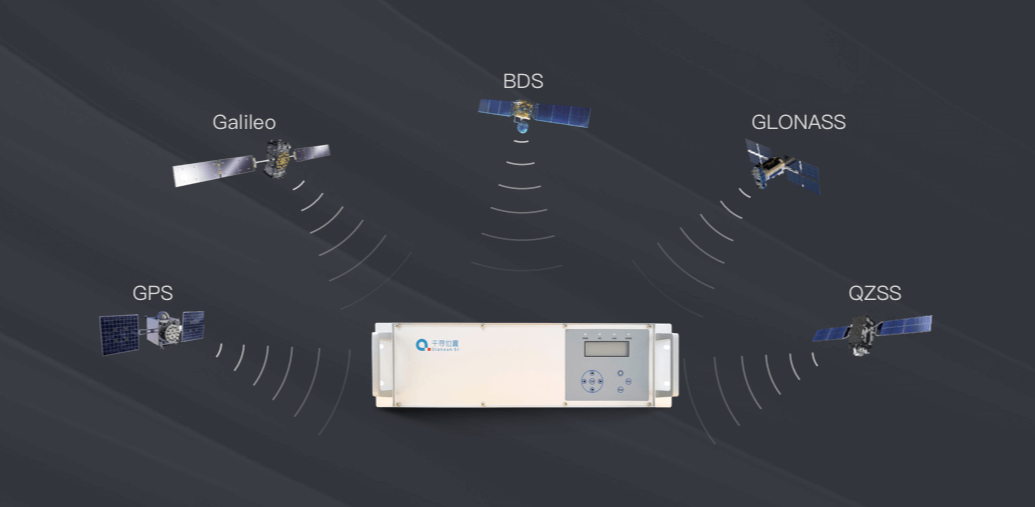
At the heart of iStation18 is its GNSS engine. It supports all major constellations and frequencies: BDS (including BDS‑3), GPS, GLONASS, Galileo, and QZSS. For channel partners, this means a single reference station covers mixed-fleet rovers from different brands, avoiding awkward compatibility discussions during procurement.
Competing reference stations such as the iREF‑M300 advertise RTK accuracies on the order of ±1 cm under good conditions, according to iMAR Navigation. iStation18 is designed to operate in that same professional tier, but with SpatiX’s own interference mitigation and multipath rejection algorithms.
In dense urban environments or near industrial RF sources, these algorithms make the difference between clean, continuous correction streams and frequent RTK re-initialization in the field. For dealers, that translates directly into fewer support tickets and stronger customer satisfaction scores, especially with survey and monitoring clients who demand 24/7 stability.
All-in-one PXI design: reducing rack complexity and install risk
Traditional CORS builds often assemble a GNSS receiver, firewall, media converter, LTE router, UPS, and separate batteries from multiple vendors. Every extra box introduces more cabling, more power supplies, and more chances for configuration errors. For a channel partner managing dozens of sites, this complexity becomes a scaling bottleneck.
iStation18 takes a PXI-based all-in-one approach. The chassis integrates the GNSS receiver, firewall, optical-to-electrical transducer, LTE, UPS, and battery into one modular unit. Each plug-in module is independent and customizable, so dealers can standardize on a core configuration while adapting to project-specific requirements.
In practical terms, this reduces install time, shipping weight, and the number of SKUs you must stock. A typical high-end reference receiver alone, such as the 336-channel C19 unit listed on Made-in-China, still requires additional networking and power gear. With iStation18, the rack footprint is compact and consistent across sites, simplifying documentation and field training.
Redundancy and power architecture for mission-critical uptime
iStation18 is engineered around the assumption that downtime is unacceptable. It supports up to three GNSS boards operating simultaneously, covering use cases that demand multiple data sources or hot-standby redundancy. For a dealer, this allows premium SLA tiers where a board failure does not interrupt service.
On the power side, iStation18 accepts both AC and DC inputs, with automatic switchover, input isolation, and a wide-voltage design. If the primary power fails, the internal lithium battery can keep the system running for more than 30 hours. In many deployments, this effectively turns iStation18 into a UPS for other connected devices in the cabinet.
The automatic restart feature after power loss, combined with dynamic environment monitoring, means fewer emergency truck rolls to remote towers. Over a fleet of 20–30 reference stations, avoiding just a handful of unplanned site visits per year can save thousands of euros in operational costs and protect margins on long-term service contracts.
Secure data formats, protocols, and remote management at scale
Channel partners need equipment that fits into existing CORS software, monitoring tools, and customer workflows. iStation18 supports standard data formats like Rinex 3.xx, CMR, CMR+, RTCM v2.x/v3.x, BINEX, and NMEA 0183, alongside the proprietary QXB format designed for efficient storage and transmission.
Data can be compressed with ZIP and stored on 32 GB of internal flash, with up to six high-rate logging sessions running simultaneously. Access is available via FTP and HTTP, and live streams can be delivered over TCP/IP, NTRIP, OSS, or serial ports. This flexibility helps integrators connect iStation18 both to national networks and to private corporate GNSS infrastructures.
Security is built in rather than bolted on. The unit supports routing functions, millisecond-level link failure detection, and IPsec VPN tunnels with AES/SHA encryption, similar in principle to secure CORS gateways described by infrastructure vendors in the GNSS market. For large fleets, the built-in web UI and cluster management enable firmware upgrades, reboots, configuration changes, and asset audits without site visits.
Where iStation18 fits in your GNSS product portfolio
For GNSS-focused distributors and resellers, iStation18 is not just another receiver; it is an anchor product that enables recurring service revenue. It is well suited for cadastral GBAS, deformation monitoring, meteorology, earthquake monitoring, smart city infrastructure, and any application where customers expect telecom-grade uptime.
Bundling iStation18 with SpatiX rovers, positioning services, or monitoring software lets channel partners sell full stacks instead of isolated devices. Compared with piecemeal CORS builds, a standardized iStation18-based offering shortens proposal cycles, simplifies after-sales support, and makes it easier to train sales engineers and technicians.
Positioning iStation18 as a “more than a CORS reference station” platform helps differentiate your portfolio in competitive tenders. When procurement teams compare options, the integrated redundancy, security, and management capabilities provide clear, concrete advantages that go beyond simple spec-sheet comparisons of channel count or raw RTK accuracy.